%2001%201.png)

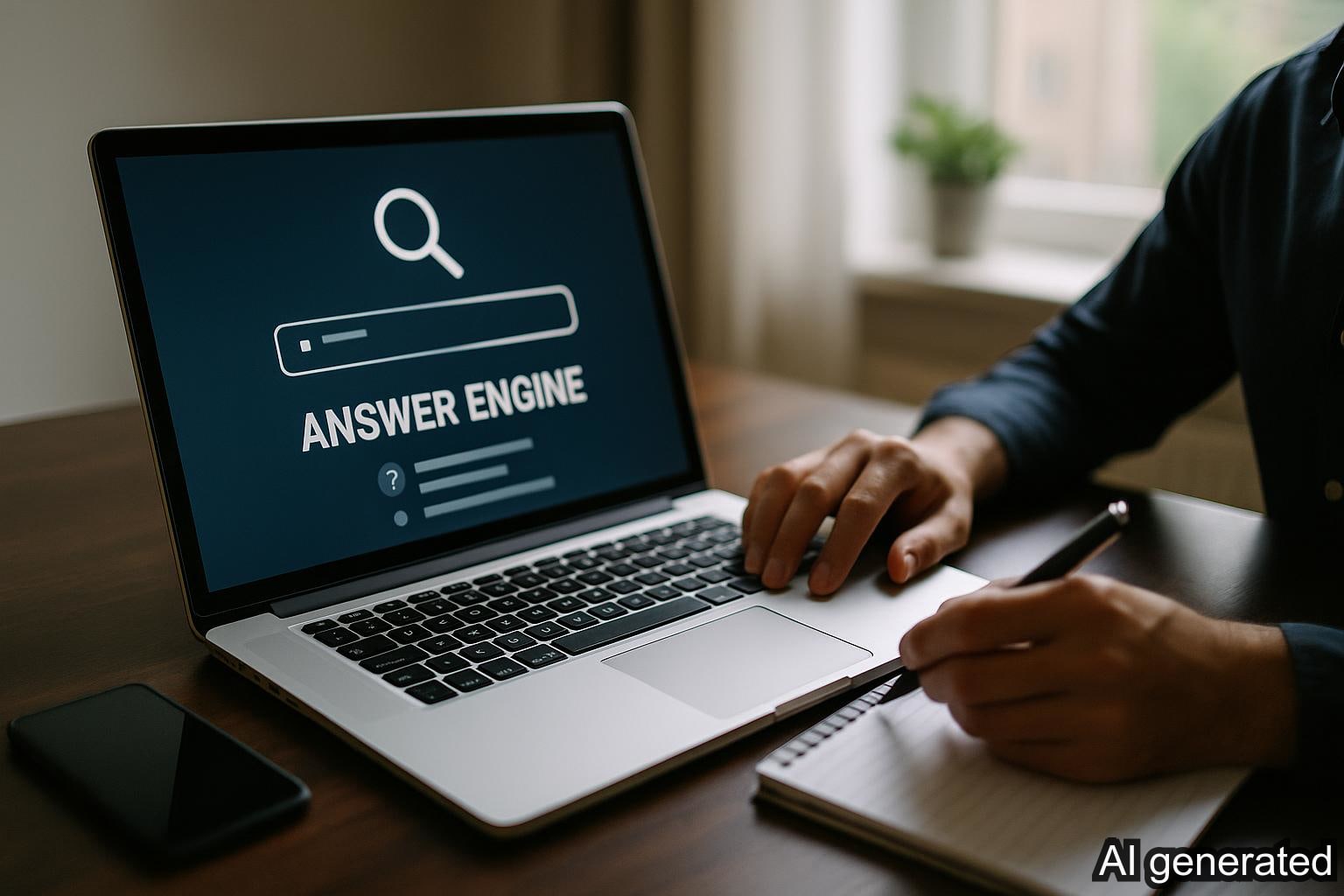
Answer Engine Optimization for Solo-Founders: The Complete Implementation Guide to AEO ROI
SEO can be a hassle, especially if you're a solo-founder looking to automate your marketing processes—but stuck at 'Where should I begin?' You know the tools exist, you've read plenty of Reddit posts, and you know you can pull it off on your own, but you just don't know what to do exactly? Here's the good news: answer engine optimization (AEO) compresses your time-to-ROI by turning AI-powered search into your competitive advantage. Instead of waiting 3–6 months for traditional SEO to deliver, answer engine optimization shows measurable results in 6–10 weeks—and it's built for bootstrapped teams that need speed without hiring experts. This guide gives you the exact framework to go from 'what now?' to 'here's exactly how' in one afternoon.
In the sections ahead, you'll discover what answer engine optimization actually is (and why it differs fundamentally from traditional SEO), walk through a four-step implementation framework you can execute immediately, see real ROI data from solo-founders who've succeeded, and learn which pitfalls to avoid. No fluff, no theory—just actionable guidance designed for resource-constrained teams ready to win.
What Is Answer Engine Optimization (AEO)? Why Solo-Founders Should Care
Answer engine optimization is the practice of optimizing your content to rank and get cited in AI-powered answer engines like ChatGPT, Claude, Perplexity, and Google's AI Overviews. Instead of competing for the traditional blue link in search results, you're positioning your content as the authoritative source that these AI tools cite when answering user questions. For solo-founders, this matters because answer engine optimization doesn't reward massive link profiles or years of domain authority—it rewards well-structured, authoritative content that directly answers specific user questions. You're competing on clarity and relevance, not domain age. That's exactly where bootstrapped teams can actually win.
AEO vs. Traditional SEO: The Key Differences
Understanding how answer engine optimization differs from traditional SEO helps you decide where to focus your limited resources. Here's the breakdown:
| Aspect | Traditional SEO | Answer Engine Optimization |
| Ranking Mechanism | Backlinks, domain authority, keyword density, user engagement signals | Content structure, directness, cited authority signals, topical relevance |
| Time to Results | 3–6 months average; 6–12 months for competitive keywords | 6–10 weeks; faster visibility with well-structured content |
| Resource Requirements | Link building, technical SEO, content at scale, ongoing optimization | Strategic content optimization, FAQ formatting, direct answers, minimal link-building |
| Competition Level | Established domains dominate; harder for new sites | Less crowded; newer sites rank when content is authoritative and well-formatted |
| ROI Timeline for Bootstrapped Teams | 6–12+ months to meaningful traffic lift | 6–10 weeks to measurable answer engine traffic and qualified leads |
The key insight: answer engine optimization implementation compresses your time-to-measurable-results by 50–75% compared to traditional SEO. You're not waiting months for backlinks to accumulate or domain authority to build. You're answering questions your audience is already asking in AI tools, positioning your content to be cited, and seeing traffic lift in weeks.
Why AEO Is the Automation Multiplier for Bootstrapped Teams
Solo-founders juggle everything: product, sales, customer support, and marketing. Traditional SEO demands constant manual work—link outreach, backlink monitoring, technical audits, ongoing content refreshes. Answer engine optimization flips this. Once you identify high-potential answer engine opportunities and optimize your content structure, the system largely maintains itself. You're not chasing links or waiting for domain authority to compound. You're asking: 'Does my content directly answer what users are asking?' and optimizing for clarity. This is why answer engine optimization implementation works for lean teams—it's efficiency-focused and measurable from day one.
Step-by-Step AEO Implementation Framework: From Audit to ROI
Here's the four-step answer engine optimization framework you can execute this week. It's replicable, low-friction, and designed to show measurable results in 6–10 weeks. Follow these steps in order to move from 'what do I do?' to 'here's exactly how.'
Step 1 – Audit Your Current SEO Foundation
Before jumping into answer engine optimization, understand what you already have. A quick audit takes 2–3 hours and reveals where your content is performing today and where answer engine gaps exist.
- Pull your top 20 currently-ranking keywords and their search volumes using Google Search Console
- Note which pages are driving traffic and from which keywords
- Identify content gaps—questions your audience asks that you haven't addressed
- Check your technical baseline: mobile responsiveness, page speed, proper indexation
- Document your current monthly organic traffic and conversion rate to establish baseline metrics
Use free tools like Google Search Console, Google Analytics, or Ubersuggest to gather this information. The goal isn't perfection—it's clarity on your starting point before optimizing for answer engines. This foundation determines which answer engine optimization opportunities will deliver the fastest ROI.
Your audit is everything. You can't optimize for answer engines if you don't know which keywords your audience is searching and which questions they're asking but not finding answers to.-
Step 2 – Identify High-Potential Answer Engine Opportunities
Not all keywords are created equal for answer engine optimization. You're hunting for questions—specific, direct queries where AI tools actively pull citations. These typically include 'how to,' 'what is,' 'why,' and comparison queries, making them ideal for AEO strategy.
- Search your target keywords in ChatGPT, Perplexity, and Google's AI Overview and note which results cite sources
- Identify keywords where answer engines are actively pulling citations—this signals active answer engine opportunity
- Prioritize 'how-to' and 'what is' queries—these convert well to answer engine results with high user intent
- Focus on keywords with 50–500 monthly searches (low competition, still meaningful volume for bootstrapped teams)
- Extract questions from your support emails, customer DMs, and comments—these are proven audience questions
RankRealizer's keyword discovery feature accelerates this step by flagging high-potential answer engine opportunities in your space and ranking difficulty. Instead of manually checking 100 keywords, you get a prioritized list in minutes. This is where answer engine optimization implementation shifts from theoretical to tactical, turning identified opportunities into concrete traffic gains.
Step 3 – Optimize Content for Answer Engines
Once you've identified high-potential keywords, it's time to optimize. Answer engines reward clear structure and direct answers. Here's your answer engine optimization checklist:
- Lead with the direct answer in your first paragraph—don't bury insights in the body
- Use clear H2 and H3 headers that mirror user questions directly
- Add an FAQ section with 5–10 questions your audience actually asks (check support channels)
- Include data, statistics, and original research—answer engines prioritize authoritative sources
- Format key information as bullet lists and short, scannable paragraphs
- Optimize for featured snippets with concise 40–60 word answer sections
- Include your author bio and relevant credentials to build topical authority
Before (generic): 'The history of answer engines is complex. They evolved from search engines, which started in the 1990s...' After (optimized for AEO): 'Answer engines are AI-powered tools that generate direct answers to user questions in seconds, citing authoritative sources. Examples include ChatGPT, Perplexity, and Google's AI Overview.' The second version wins with answer engines because it answers the question immediately and structurally.
Optimize your 3–5 highest-potential pages first using this answer engine optimization approach, measure performance, then expand the process to the rest of your content. This phased strategy reduces overwhelm and proves what works before scaling.
Step 4 – Measure & Iterate
Answer engine optimization isn't 'set it and forget it.' You need to track performance and refine based on what's working. Here's what to measure:
- Answer engine impressions and clicks (track via Google Search Console and third-party AEO monitoring tools)
- Ranking position in AI Overviews and answer engine result pages
- Organic traffic attributed to answer engine sources
- Conversion rate from answer engine visitors—are they more qualified than traditional search visitors?
- Engagement metrics: time on page, scroll depth, bounce rate
Set your baseline today, check metrics weekly, and expect to see movement in 6–10 weeks. Most solo-founders see a 30–50% lift in answer engine traffic within this window, with conversion rates 20–40% higher than traditional search traffic (because users found direct answers, not landing pages). This measurable ROI is what makes answer engine optimization implementation so compelling for bootstrapped teams.
Ready to track your AEO results? Start your free keyword discovery audit with RankRealizer to get a prioritized list of answer engine opportunities and automated tracking. See which keywords could drive your next traffic breakthrough in just 5 minutes.
Real-World Case Study: Solo-Founder AEO Success in SaaS
The Scenario: Sarah runs a bootstrapped SaaS tool for freelancers with 2,000 monthly organic visitors. She was stuck—traditional SEO wasn't delivering ROI fast enough, and she had no budget for a dedicated marketer. She needed answer engine optimization to accelerate growth without adding headcount.
The Strategy: Sarah implemented answer engine optimization on eight core how-to and what-is content pieces covering her most-asked customer questions. She restructured content for clarity, added detailed FAQ sections with customer support questions, and optimized for featured snippets. Total implementation time: 20 hours over 8 weeks.
The Results (12 weeks post-implementation):
- Organic traffic grew from 2,000 to 3,100 monthly visitors (55% lift)
- Answer engine traffic accounted for 480 of those new visitors—nearly 16% of total organic growth
- Conversion rate from answer engine visitors: 8.2% vs. 4.1% from traditional search
- This translated to 12 qualified leads per month—$2,400+ MRR in new recurring revenue
- ROI timeline: 10 weeks to measurable results with 20 hours of time investment
Sarah's success came from doing what solo-founders do best: solving customer problems with clear, direct answers. She wasn't chasing backlinks or competing for domain authority—she was answering questions her customers were already asking in AI tools. This is the power of answer engine optimization vs. traditional SEO for resource-constrained teams.
Common Pitfalls Solo-Founders Make with AEO (and How to Avoid Them)
Even with the best framework, answer engine optimization can go sideways. Here are the mistakes we see most often—and how to dodge them:
- Mistake: Targeting keywords no one actually searches. Fix: Use Google Search Console and answer engine optimization search volume tools to validate demand before optimizing.
- Mistake: Ignoring technical SEO while optimizing for AEO. Fix: Fix mobile responsiveness, page speed, and indexation issues first—they amplify answer engine optimization gains.
- Mistake: Over-complicating content structure to 'game' answer engines. Fix: Answer the question in the first paragraph, then support it with details. Simplicity wins with answer engines.
- Mistake: Expecting instant results from answer engine optimization. Fix: Give it 6–10 weeks minimum. Answer engines index regularly, but they're not immediate.
- Mistake: Setting it and forgetting it. Fix: Check metrics weekly and update content if new information emerges or rankings shift.
Getting Started with RankRealizer: Your AEO Automation Partner
Answer engine optimization sounds straightforward in theory, but execution requires tools that surface opportunities and track performance automatically. That's where RankRealizer comes in. We built RankRealizer specifically for bootstrapped founders who need to automate marketing without complexity or agency overhead.
Our platform does three things solo-founders need to succeed with answer engine optimization implementation:
- Keyword Discovery: Automatically identify high-potential answer engine opportunities in your niche, ranked by conversion potential and competition
- AEO Opportunity Flagging: See which of your current content pieces are missing answer engine positioning and get specific recommendations to unlock visibility
- Automated Tracking: Monitor your answer engine rankings and traffic in one dashboard—no manual spreadsheet updates or guesswork
Used by 500+ bootstrapped founders across SaaS, e-commerce, and service industries. Average time saved: 10–15 hours per month through answer engine optimization automation. Average ROI: 30–50% traffic lift in 10 weeks.
Ready to automate your AEO strategy? Get your free AEO readiness audit in 5 minutes. We'll show you exactly which answer engine opportunities exist in your space and how much monthly traffic you could capture with answer engine optimization.
Conclusion: Answer Engine Optimization Is Your Unfair Advantage
Answer engine optimization isn't the distant future—it's happening right now. And for solo-founders, it's your closest shot at a marketing advantage: compress months of SEO work into weeks, compete with established players without massive authority, and drive faster ROI with less effort. Your answer engine optimization implementation starts today.
You don't need to hire an expert. You don't need a massive budget. You just need clarity on which keywords matter, how to structure your content for answer engines, and a simple way to track results. That's the framework we've walked you through—and it works for bootstrapped teams of any size. Answer engine optimization ROI is measurable, achievable, and within your control.
Start with Step 1 this week: audit your current SEO foundation and identify one high-potential answer engine opportunity. Then implement the answer engine optimization checklist in Step 3. Give it 10 weeks, track metrics weekly, and watch your answer engine traffic climb. This is the exact formula Sarah used to add $2,400+ MRR.
Don't leave answer engine optimization opportunities on the table. Let RankRealizer handle the heavy lifting—start your free AEO audit today and discover which keywords could transform your growth this quarter. Your next 55% traffic lift is waiting.
Frequently Asked Questions About Answer Engine Optimization
How long does it take to see results from answer engine optimization?
Most solo-founders see measurable answer engine traffic and ranking improvements within 6–10 weeks of implementing the framework. This is significantly faster than traditional SEO (which typically takes 3–6 months). The speed of your results depends on content quality, how well-optimized your foundation is, and keyword competitiveness.
Do I need to completely rewrite my existing content for answer engine optimization?
No. Most content can be optimized for answer engine optimization with targeted edits: moving the direct answer to the first paragraph, adding clear headers, including an FAQ section, and formatting key information as bullets. A complete rewrite is rarely necessary—think of it as restructuring for clarity. This is why answer engine optimization implementation is so efficient for bootstrapped teams.
Is answer engine optimization the same as traditional SEO?
No. Both focus on search visibility, but answer engine optimization prioritizes direct answers and content structure over backlinks and domain authority. For solo-founders with limited resources, answer engine optimization implementation is often more efficient because it compresses time-to-ROI and doesn't require massive link-building campaigns.
What tools do I need to implement answer engine optimization?
You can start with free tools like Google Search Console and Google Analytics. For advanced opportunity identification and tracking, tools like RankRealizer streamline the process and save 10–15 hours per month. The best solo-founder stack includes keyword discovery, answer engine opportunity flagging, and automated performance tracking.
Can answer engine optimization work for all industries?
Answer engine optimization works best for niches where users ask direct questions seeking clear answers—SaaS, e-commerce, professional services, and how-to content are ideal. It's less effective for purely transactional keywords (like 'buy blue sneakers') where users have already decided and are browsing product pages. Assess your keyword mix to determine your answer engine optimization potential.
How much does answer engine optimization cost if I hire an agency?
Agencies typically charge $2,000–$5,000+ per month for AEO strategy and implementation. For solo-founders, doing it yourself with guidance (like this framework) costs near-zero in dollars—just time. Using a tool like RankRealizer ($199–$499/month) removes the time friction without the agency overhead, making it the affordable choice for bootstrapped teams.


.png)