%2001%201.png)

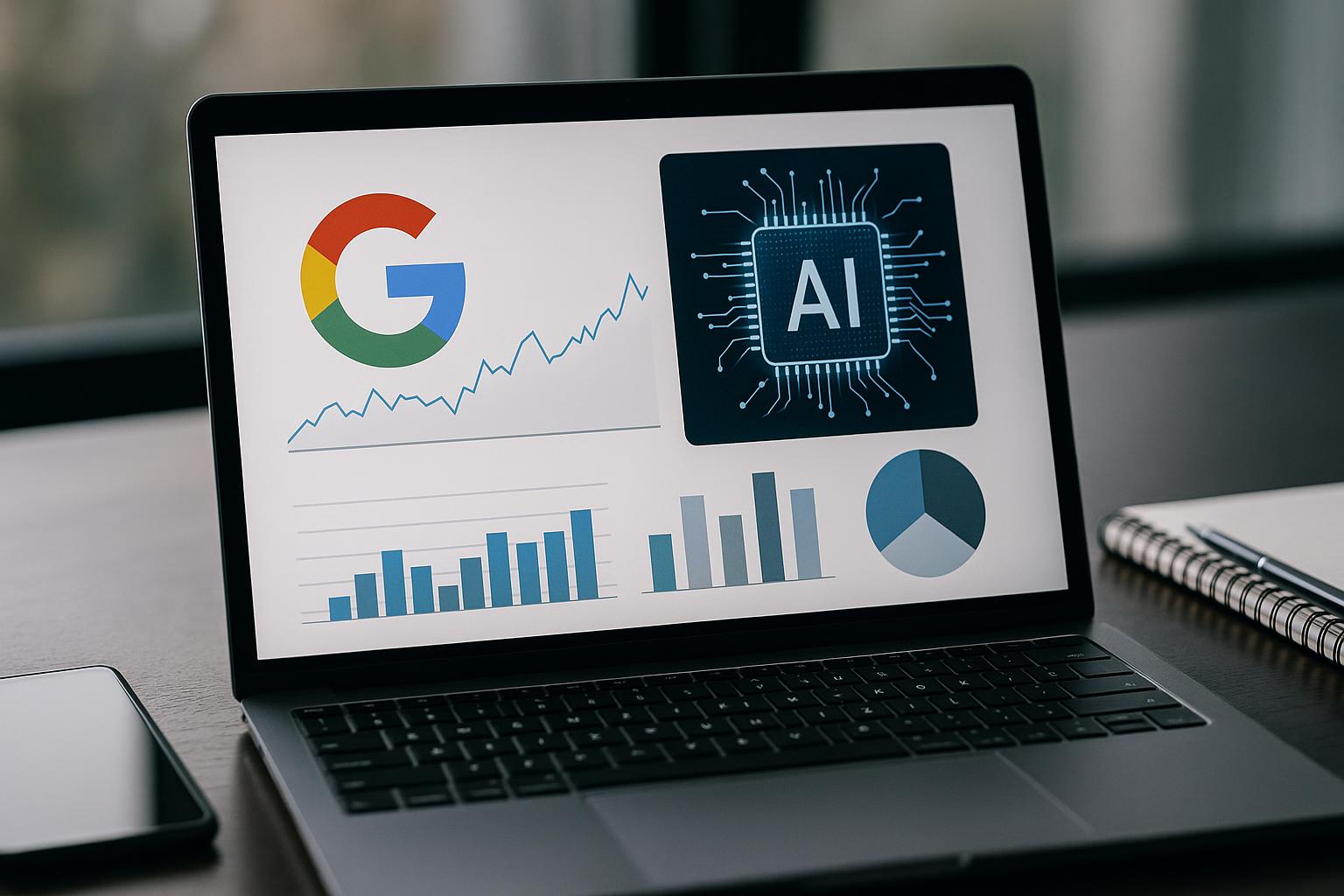
Google AI for SEO: A Founder's Guide to Automating Your Search Strategy
SEO can be a hassle, especially if you're a solo-founder looking to automate your marketing processes. You've read the Reddit threads. You know the tools exist. But you're stuck at a familiar question: Where should I begin?
The challenge is real. Between product development, customer support, and fundraising, learning SEO feels impossible. Yet ignoring search visibility means missing customers actively searching for solutions like yours. You want to leverage Google AI for SEO, but the sheer number of options and the confusion around what AI actually does makes you hesitant to invest time or money.
The good news: Google AI for SEO and AI-powered automation tools aren't magic, and they're not hype. They're practical tools designed to handle repetitive, data-heavy work so you can focus on strategy and growth. This guide cuts through the noise and shows you exactly how AI SEO automation saves founders time, which tools actually work, and how to take your first step this week. You're at the right place.
What Google AI Actually Does for SEO (And What It Doesn't)
Before investing in any tool, let's ground ourselves in what's real. Google AI for SEO isn't about robots writing your content or making strategic decisions for you. It's about automating the tasks that drain your time and surfacing insights you'd miss manually.
The Reality Check: AI as Your SEO Co-Pilot, Not Replacement
Think of AI SEO tools as your relentless research assistant. They excel at processing massive datasets, spotting patterns, and surfacing opportunities. They handle the grunt work: analyzing thousands of keywords, tracking competitor moves, identifying content gaps. But strategy, brand voice, and final direction? That's still you. This matters because it sets realistic expectations. You're not replacing SEO expertise with AI. You're buying back time to focus on what only a founder can do: build strategy and make judgment calls that define your competitive edge.
Three Things AI SEO Tools Actually Do Well
- Rapid keyword discovery automation. AI scans search volume, competition, and intent to surface keywords you should target. What takes hours manually takes minutes with the right tool.
- Competitor analysis at scale. AI continuously monitors which keywords your competitors rank for, which content drives their traffic, and where gaps exist. You get actionable insights without weekly manual competitor checks.
- Content optimization recommendations. AI analyzes top-ranking pages and suggests specific improvements to headings, meta descriptions, keyword placement, and structure. No SEO degree needed to understand or implement the guidance.
What AI Still Can't Do (And Why That's Okay)
AI can't create your unique competitive narrative or understand your audience's pain points the way you do. It shouldn't make final decisions about your content strategy without human judgment. These aren't failures. They're reminders that AI works best paired with founder insight. The founders who win with AI SEO use it to amplify their thinking, not replace it.
3 Ways AI SEO Automation Saves Founders Time
Here's what matters most: getting your time back. These three concrete applications show how AI-powered SEO automation frees up hours each week for what actually drives revenue.
Keyword Discovery in Minutes, Not Weeks
Manual keyword research is exhausting. You start with a seed keyword, brainstorm variations, check Google, read forums, analyze competition, and repeat. A comprehensive keyword strategy could consume 20 to 30 hours of your time.
With keyword discovery automation, this compresses into 30 minutes. Input your product, and the tool surfaces hundreds of relevant keywords ranked by search volume, difficulty, and intent. It spots long-tail opportunities you'd never find manually. More importantly, it flags keywords your audience is searching for that you're not ranking for yet. These are your quick wins.
That reclaimed time moves from research busywork to actual strategy: Which keywords align with our roadmap? Which should we target first? This shift from execution to thinking is where founders add irreplaceable value.
Competitor Tracking Without Constant Monitoring
Keeping tabs on competitors manually meant checking their websites weekly, guessing their strategy, and hoping you didn't miss anything. With AI-powered competitor analysis, you get automated insights that run in the background.
The tool continuously monitors which keywords competitors rank for, what content drives their traffic, and where they're winning. More valuable: it shows you keywords they rank for that you don't. These are opportunities hiding in plain sight. Instead of spending 2 to 3 hours weekly on manual research, you glance at a report and act on insights. For founders, this means staying competitive without obsessing over others' moves.
Content Optimization That Doesn't Require an SEO Degree
After writing content, optimization normally means learning on-page best practices: keyword density, heading structure, meta descriptions, internal linking. It's learnable, but it's another thing on your overflowing plate.
AI SEO tools analyze your content against top-ranking competitors and serve up specific optimization suggestions. Add this keyword to your H2. Strengthen this section with data. Consider this internal link. You don't need to understand the reasoning behind each recommendation. You just implement. This cuts optimization time in half and removes the anxiety of wondering if you're doing it right.
Choosing the Right AI SEO Tool: Avoiding Overwhelm
This is where many founders get stuck. Dozens of AI SEO automation tools exist. Comparing features, reading reviews, and testing options can consume a week you don't have. The key is knowing what to prioritize and what to ignore.
Core Features That Actually Matter for Founders
Forget exhaustive feature checklists. These four things separate a useful tool from a time-sink:
- Simple interface. You don't need enterprise-level complexity. The tool should feel intuitive within 15 minutes. If you're drowning in dashboards and settings, it's wrong for your needs.
- Fast keyword discovery automation. This is non-negotiable. The tool should surface opportunities in minutes and let you prioritize based on effort versus impact.
- Competitor analysis that shows what matters. You need to see which keywords competitors rank for and which gaps exist, not raw data dumps. Actionable insights, not information overload.
- Clear reporting without overwhelm. You should understand your progress without decoding a data science thesis. Simple metrics: ranking improvements, traffic growth, keyword gains.
- Quick setup. If implementation requires weeks of onboarding or external consultants, it's not built for founders juggling multiple priorities.
Red Flags: What to Avoid in AI SEO Tools
Watch for these warning signs:
- Extensive configuration required before use. Life's too short for week-long setups.
- Steep learning curve. If the tutorial exceeds a few hours, it's not founder-friendly.
- Dashboard overload. Hundreds of metrics and options paralyze instead of clarify.
- Unclear pricing. Hidden costs and surprise charges erode trust.
- Poor customer support. You need fast answers to simple questions, not days-long email exchanges.
Remember: the best tool is one you'll actually use. A solid tool used consistently beats a perfect AI SEO solution gathering digital dust in your browser tabs.
RankRealizer: Built for Founder Simplicity
RankRealizer is purpose-built for founders who want SEO results without complexity. It combines the keyword discovery automation and competitor analysis capabilities you need with an interface that doesn't require SEO expertise to navigate. No overwhelming dashboards. No weeks of onboarding. Just clear insights, actionable recommendations, and time back in your week.
Visit www.rankrealizer.com to see how other founders are automating their SEO without the stress. Our platform is designed specifically for founder time constraints and decision paralysis.
Your First Steps: A Founder-Friendly Action Plan
Theory is useful. Action is everything. Here's a three-step roadmap you can execute this week to move from paralysis to progress with Google AI for SEO.
Step 1: Audit Your Current SEO Situation (1 Hour)
Before choosing a tool or publishing anything, understand where you stand. Ask: What keywords do we rank for? Where are our biggest content gaps? Which keywords are competitors ranking for that we should target?
You can do this manually in an hour by checking Google Search Console and reviewing competitor websites. But this is exactly what AI SEO automation was built for. RankRealizer's competitor analysis and keyword discovery features compress this audit from an hour to 15 minutes. Your goal: a clear picture of your SEO baseline and three keyword opportunities to target in the next 30 days.
Step 2: Pick One Tool and Commit This Week
Stop researching. Pick a tool based on the criteria above. If RankRealizer fits, great. If you want to test another option, test it. But commit to a decision by end of week and set it up this weekend. The perfectionism trap kills more SEO strategies than bad tools ever will. A good-enough AI SEO tool used consistently beats a perfect tool you never implement. You can always switch later if needed.
Step 3: Run Your First Campaign and Measure Results (30 Days)
Pick one keyword opportunity from your audit. It should be realistic to rank for (lower competition than your biggest keywords) but valuable to your business. Create new content targeting that keyword or optimize an existing page using your tool's recommendations.
Publish it. Wait 30 days. Measure: Did your ranking improve? Did you gain clicks? Did traffic increase? Keep metrics simple. You're not running complex analytics. You're looking for proof that the system works. This 30-day cycle builds momentum. You see wins. You gain confidence. You run the cycle again with more keywords. Before long, SEO becomes a consistent growth lever instead of a vague task you keep postponing.
The Takeaway: AI SEO Is About Buying Back Your Time
Google AI for SEO and AI-powered automation tools aren't about replacing your judgment or magically ranking your site. They're about reclaiming the 10 to 15 hours per week you'd spend on keyword research, competitor analysis, and optimization. Those hours go straight back to strategy, product, and customer development where they matter most.
You don't need to become an SEO expert. You need the right tool that handles repetitive work so you can focus on decisions only you can make. And you need to stop researching and start implementing this week.
Ready to automate your SEO without overwhelm? Try RankRealizer, built for founders like you. Visit www.rankrealizer.com to start your free trial or book a founder demo. Be found on AI search.
Frequently Asked Questions About AI SEO
Is Google AI for SEO the same as using AI SEO tools?
Not quite. Google AI refers to Google's technology powering search algorithms. AI SEO tools are third-party platforms using artificial intelligence to automate tasks like keyword discovery and competitor analysis. You don't control Google AI directly. You optimize for it. AI SEO tools help you do that faster and smarter.
How long does it take to see results from AI SEO automation?
Time savings appear immediately. Keyword research and competitor analysis that took hours now take minutes. Rankings and traffic improvements typically appear within 4 to 8 weeks, depending on competition and content quality. Focus on the process first. Results follow.
Can I do SEO automation without an SEO expert?
Yes. AI SEO automation tools are designed to eliminate the need for deep expertise. They surface keyword opportunities, competitive insights, and optimization suggestions. Your job is to prioritize and create. You don't need to understand the algorithm. You just need to act on what the tool recommends.
What's the best AI SEO tool for small teams?
The best tool has a simple interface, fast keyword discovery automation, competitor analysis, and clear reporting. It should be set up in days, not weeks, and fit your budget. RankRealizer is built specifically for founders and small teams with these priorities. But test any AI SEO automation tool that fits your needs before committing.
Will AI replace human SEO specialists?
AI will reshape the role, not eliminate it. Specialists will focus more on strategy and creative problem-solving while AI handles routine tasks. For founders, this is good news. You can achieve AI-automated results now without hiring an expensive specialist. If you hire a specialist later, they'll use these tools too.


.png)