%2001%201.png)

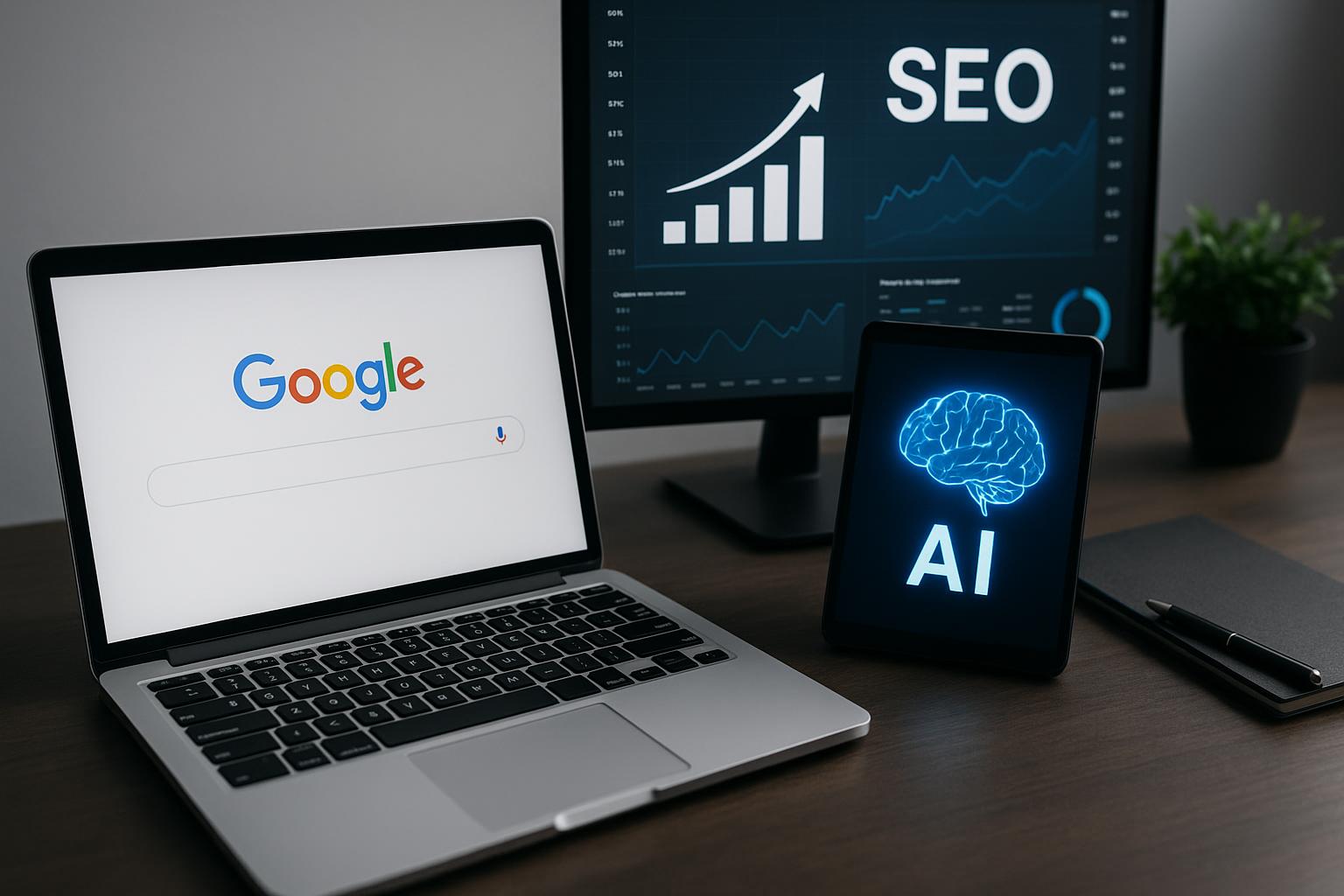
How to Rank on Google as a Solo Founder: The Beginner's Guide to AI SEO Tools
SEO can feel overwhelming when you're a solo founder trying to automate your marketing—especially when you're stuck asking 'Where do I even start?' You know ranking on Google matters. You've read the Reddit threads and seen the tools. But 'what do I do exactly?' remains a mystery. Here's the truth: learning how to rank on Google doesn't require a marketing degree or endless hours of manual work. This guide cuts through the confusion and gives you a practical 4-step SEO roadmap you can execute this week, plus clarity on which AI SEO tools actually work for solopreneurs without overwhelming complexity or draining your budget.
By the end, you'll understand how Google's ranking algorithm actually works, know exactly which keywords to target for your SaaS, and have a clear framework for choosing an AI SEO tool that fits your reality—not the enterprise dream. You're at the right place.
Google Ranking Fundamentals (Without the Jargon)
Before diving into the how-to, let's demystify the 'what' and 'why' of ranking on Google. Understanding these basics removes the intimidation factor that stops most solo founders from even trying.
Why Rankings Matter for SaaS Founders
Here's the reality: if you're bootstrapping your SaaS and paid ad budgets feel too expensive, organic traffic from Google search results is pure gold. Every person who finds you through search has already shown intent—they're actively looking for a solution you provide. That's inbound, qualified leads without paying per click.
Three months into your startup, customer acquisition costs matter. You need qualified leads but Google Ads drains your runway fast. You shift focus to content. Within 6–12 months of consistent, SEO-smart content, you could be capturing 10, 20, or 50+ qualified leads monthly through organic search—completely free after the initial effort. That's why understanding how to rank on Google matters so much for solopreneurs and small teams. It's leverage that compounds over time.
The 3 Core Factors Google Actually Cares About
Google's ranking algorithm considers hundreds of signals, but three fundamentals matter most when you're starting from scratch and building an SEO strategy as a solo founder:
- Relevance: Does your content match what people are actually searching for? If someone searches 'email automation for freelancers' and your page directly answers that question with the keyword naturally placed, Google sees perfect relevance. Your content matches search intent.
- Authority: Does Google trust your site? Authority builds through backlinks (other websites linking to you as a credible source), domain age, and signals that real people find your content helpful and share it. Think of backlinks as votes saying 'this source knows what it's talking about.'
- User Experience: Does your page actually serve visitors well? Fast load times, mobile-friendly design, clear formatting, and readable content all signal that people have a positive experience on your site. Google rewards sites that users enjoy visiting.
Master these three factors, and you'll see meaningful ranking improvements. Everything else is detail work that AI SEO tools handle for you automatically.
The Solo Founder's 4-Step SEO Roadmap
Ranking on Google doesn't happen overnight, but it doesn't require a marathon either. Here's how to rank on Google broken into four manageable steps you can tackle over the next few weeks. Each step focuses on what actually moves the needle for solo founders without requiring specialized skills or excessive time investment.
Step 1: Research Keywords That Matter (Find Your Goldilocks Keywords)
Not all keywords are created equal. Competing for 'email marketing' means fighting millions of results dominated by established giants—a losing battle for a solo founder. Targeting keywords nobody searches is equally pointless. Your sweet spot: low-competition keywords with real search volume and high buyer intent—what we call 'Goldilocks keywords.'
Here's a real example: Sarah, a solopreneur building an email automation SaaS for freelancers, spent hours researching keywords manually. She discovered that 'email automation for freelancers' had 500 monthly searches, low competition, and perfect intent for her product. She wrote one solid article targeting that phrase. Six months later, she ranked #2 on Google for that keyword and captured dozens of qualified leads monthly. She never would have found that keyword opportunity manually—it required analyzing search data most solo founders don't have access to.
This is where AI SEO tools shine and save you time. A keyword discovery tool surfaces opportunities you'd miss, shows search volume, difficulty scores, and related keywords so you can prioritize the ones that actually matter for your business. Instead of 10 hours of manual research, you get actionable insights in 30 minutes.
Step 2: Optimize Your Content (Write for Humans First, Google Second)
You've identified a keyword worth targeting. Now, write content that actually serves the person searching. Optimization isn't about keyword stuffing or gaming the algorithm—it's about clarity and answering what people actually want to know.
Here's your 5-point content optimization checklist for better Google rankings:
- Use your target keyword in the title: Example: 'Email Automation for Freelancers: A Step-by-Step Guide.' Clear, relevant, searchable.
- Answer the search intent immediately: If someone searches 'how to automate emails,' start with the how within the first paragraph. Don't bury the answer.
- Use the keyword naturally in your first 100 words and throughout: Only where it fits. Never force it awkwardly. Natural keyword placement reads better and ranks better.
- Structure with clear headings (H2s and H3s): This helps both humans scan your content and Google understand your structure and topic hierarchy.
- Include internal links to related pages: Linking between your own content signals related topics to Google and keeps readers engaged longer on your site.
Write for your reader first. Google will follow naturally when your content is clear, helpful, and well-structured.
Step 3: Build Authority Signals (Earn Your Credibility Fast)
Even great, optimized content needs credibility signals to rank competitively. For solopreneurs, you don't need an expensive link-building campaign or PR agency—you need strategic, high-quality authority building that you can do yourself.
Quick wins include: writing guest posts on industry blogs (one backlink from a trusted site carries significant weight), linking between your own pages internally (helps Google understand your site structure), and consistently publishing quality content (signals active, trustworthy expertise over time). One early-stage founder secured three high-authority backlinks in one month by writing one thoughtful guest post and mentioning her SaaS naturally within it—no expensive PR firm, just smart strategy and helpful content.
Step 4: Monitor and Iterate (What Gets Measured Gets Better)
You've published, optimized, and built some authority. Now track what's working. You only need three core metrics: keyword rankings (is your target keyword climbing in position?), organic traffic (are people finding you?), and conversions (are they becoming customers?).
This is where AI SEO tools save you critical hours. Instead of manually checking keyword rankings every week (which solo founders rarely do consistently), your tool monitors rankings automatically and alerts you when things shift. You spend 5 minutes reviewing results, not 2 hours gathering data. Then you iterate—if a page isn't ranking, optimize more. If it's ranking but traffic is low, improve the call-to-action or page speed. Data drives decisions.
Why AI SEO Tools Aren't Scary (Demystifying the Fear)
Here's what we hear from founders constantly: 'I'm worried AI SEO tools will write bad content for me,' or 'Will Google penalize me for using automation?' or 'Is this too complicated for a non-technical founder?' These concerns are completely valid, but they're based on real misconceptions about how AI and SEO actually work. Let's clear them up so you can use AI SEO tools with confidence.
What AI Actually Does (And What It Absolutely Doesn't)
AI SEO tools are assistants, not replacements for your thinking. Here's exactly what they do and what they don't do:
- AI finds keywords you might miss: It analyzes massive amounts of search data to surface opportunities. You decide which ones fit your strategy and brand.
- AI suggests optimization opportunities: It says 'your competitor ranked for this keyword with a 1,500-word article; consider that content length.' You write the actual, unique content.
- AI tracks rankings automatically: Saves you hours checking Google Search Console manually every week, freeing time for strategy.
- AI absolutely does NOT write your strategy: You decide what to build, why, and how to position it. AI executes the research and optimization mechanics—not your vision.
Think of it like a GPS for ranking on Google. The GPS doesn't decide where you should go—you do. It just gets you there faster and avoids traffic jams you couldn't see on your own.
4 Common Misconceptions About AI SEO Tools (Busted)
- Misconception: 'AI will write bad content for me.' Reality: Modern AI SEO tools don't write your content—they research and suggest optimizations. You maintain full control over voice, quality, accuracy, and messaging. You stay in the driver's seat.
- Misconception: 'Google will penalize me for using automation.' Reality: Google penalizes low-quality, spammy content—not the tools used to optimize it. Following SEO best practices (whether manually or with a tool) is always rewarded, never penalized.
- Misconception: 'AI SEO tools are too expensive for a solopreneur.' Reality: Modern tools built for small teams cost less than one part-time contractor. The ROI from even a few qualified leads from organic search pays for months of subscription.
- Misconception: 'It will steal my brand voice.' Reality: You write your content. The tool suggests optimizations. Your voice remains entirely yours—just sharper, faster, and more strategically informed by data.
AI SEO tools aren't magic, and they don't replace strategy or creativity. They're multipliers—they turn 10 hours of manual keyword research into 1 hour of smart, targeted work. For solopreneurs trying to rank on Google without a marketing team, that's the difference between 'SEO sounds impossible' and 'I can actually do this.'-
Ready to see what keyword opportunities AI can uncover for you? Try RankRealizer's free keyword discovery tool and see your first ranking opportunities in minutes. No credit card required.
Choosing Your AI SEO Tool (The Framework That Matters)
Not all AI SEO tools are built for solopreneurs. Some are designed for enterprise teams and come with bloated features you'll never use, steep learning curves, and prices that don't make sense for a 2-person startup. Here's what actually matters when you're running lean and need to rank on Google without overwhelm.
5 Must-Have Features for Solo Founders
- Easy Keyword Discovery: Find opportunities in minutes, not hours. You should identify target keywords and see search volume, difficulty, and intent clearly without confusion or overwhelming data.
- Simple Content Optimization: Clear, actionable suggestions on how to improve existing content—header structure, keyword placement, content length—without unnecessary jargon or feature bloat.
- Built-in Ranking Tracking: Monitor your top keywords automatically. Weekly or daily updates on where you rank, so you always know what's working and what needs attention.
- Competitor Insights: See what competitors are ranking for and understand why. This informs your strategy without requiring manual analysis of 10 competitor websites.
- Minimal Setup Time: You shouldn't need 2+ hours of onboarding or technical configuration. Connect your site, add keywords, start analyzing. It should feel intuitive.
RankRealizer vs. Alternatives: Which Tool to Choose
| Feature | RankRealizer | Outrank | Ahrefs | Semrush |
| Keyword Discovery | ✓ Simple & Fast | ✓ Advanced | ✓ Comprehensive | ✓ Comprehensive |
| Content Optimization | ✓ Clear Suggestions | ✓ AI-Driven | ✓ Detailed | ✓ Detailed |
| Ranking Tracking | ✓ Automated | ✓ Automated | ✓ Automated | ✓ Automated |
| Competitor Analysis | ✓ Yes | ✓ Yes | ✓ Extensive | ✓ Extensive |
| Setup Time | 5 minutes | 15 minutes | 30+ minutes | 30+ minutes |
| Price (Base Tier) | $29–$99/mo | $79–$299/mo | $99–$999/mo | $120–$540/mo |
| Best For | Solo Founders | Mid-size Teams | Enterprise/Agencies | Enterprise/Agencies |
All four tools work and will help you rank on Google. The real difference is focus and complexity. Ahrefs and Semrush offer massive feature sets—perfect if you're managing SEO for multiple clients or a large in-house team. Outrank adds AI writing features, which is valuable if content creation is your biggest bottleneck. RankRealizer strips away the complexity and gives you exactly what solo founders need: fast keyword research, clear optimization guidance, and automated ranking tracking—without overwhelming you, slowing you down, or draining your budget.
Choose based on your reality as a solo founder. If you have 5 hours a week to dedicate to SEO, RankRealizer helps you move faster and smarter. If you're managing SEO for a growing team of writers, Outrank's AI writing features might justify the higher cost. If you're an agency managing dozens of client accounts, Ahrefs or Semrush's comprehensive depth is worth the investment. For most solopreneurs trying to rank on Google alone? RankRealizer removes friction and keeps you focused on what matters.
Getting Started This Week (Your 30-Minute Setup Checklist)
You don't need a month-long planning sprint to start ranking on Google. You need a clear, fast first step. Here's a 30-minute checklist to kickstart your SEO and begin building momentum this week.
- Choose your primary keyword (5 minutes): What one keyword best describes your core offering and what your ideal customer searches for? Example: 'Email automation for freelancers,' not the overly broad 'email marketing.'
- Set up keyword tracking in your AI SEO tool (5 minutes): Sign up for RankRealizer or your chosen platform, add your site, and input 3–5 target keywords you want to monitor and rank for.
- Audit your top 3 existing pages (10 minutes): Look at your homepage, main product page, or highest-traffic blog post. Is your target keyword in the title? In the first paragraph? Does it answer the search intent clearly? Take notes on optimization gaps.
- Plan your first content piece (10 minutes): Decide: will you optimize existing content or create something new? Pick a target keyword. Jot down 3–4 section headings you'll cover to answer that search query completely.
That's it. 30 minutes from now, you'll have a keyword strategy and a first piece of content on the roadmap. Not theoretical—genuinely actionable.
Conclusion: You're Ready to Rank on Google
Ranking on Google isn't magic, and it's not reserved for well-funded marketing teams or technical SEO experts. It's a process: find the right keywords, optimize your content to answer them, build credibility signals, and track what works. Then iterate. Solopreneurs have executed this successfully, and so can you.
AI SEO tools don't replace your strategy—they accelerate it. They find keywords you'd miss in 10 hours of manual research, suggest optimizations you'd overlook, and save you hours of manual tracking every week. You stay in complete control of your brand voice and business direction. The tool handles the parts that consume endless time without adding strategic value.
Right now, search behavior is shifting toward niche solutions like yours. If you wait six months, you might lose months of potential organic traction to a competitor who started today. The best time to rank on Google was yesterday. The second-best time is this week.
Ready to stop wondering where to begin and start ranking? Start your 14-day free trial of RankRealizer today—no credit card required. In 30 minutes, you'll know exactly which keywords to target and how to optimize for them. No overwhelm. No high-pressure sales. Just clarity and a path forward to grow your SaaS through organic search.
Frequently Asked Questions
How long does it take to rank on Google?
Typically 3–6 months to see meaningful movement on moderately competitive keywords. Less competitive, highly niche keywords can rank in 4–8 weeks. The timeline depends on your site's age, existing domain authority, and content quality. Consistency beats speed—one piece of genuinely amazing content beats five mediocre pieces every time.
Do I need a blog to rank on Google as a SaaS founder?
You need content pages, not necessarily a traditional 'blog.' Your homepage can rank. Your product pages can rank. Your pricing page can rank. A blog is just one place to house content strategically. For SaaS founders, blog posts targeting informational keywords (how-to, comparison, educational content) often feed qualified leads to your core product pages, so yes—a blog is usually the fastest path to organic rankings and leads.
Can I rank on Google without backlinks?
Technically yes, especially for lower-competition keywords or highly specific niche topics. But backlinks are trust signals that Google weights heavily. You don't need hundreds. A handful of quality backlinks from relevant, authoritative sites often outweigh dozens from random sources. Focus on creating content worth linking to first, then pursue backlinks strategically through guest posts and industry relationships.
What's the difference between organic search and paid Google Ads?
Paid ads (Google Ads) charge you per click—you pay every time someone visits from your ad. Organic search (SEO) is free traffic—once you rank, people find you without per-click costs. The trade-off: organic takes longer to see results (weeks to months), but it's sustainable, compounding, and cheaper long-term. For bootstrapped founders, organic search is usually the smarter long-term play.
Is RankRealizer suitable for non-technical founders?
Absolutely. RankRealizer is designed to be intuitive and jargon-free. You don't need technical knowledge, programming skills, or advanced SEO training. If you can use Google and Slack, you can use RankRealizer confidently. The tool handles the complexity—you just provide strategic direction and review clear recommendations.
What if my SaaS operates in a highly competitive niche?
Start with lower-competition keywords (long-tail, specific phrases) where you can realistically rank quickly. 'Email automation for freelancers' is easier to rank for than the generic 'email marketing.' Once you establish domain authority with niche keywords and build backlinks, you can gradually tackle more competitive, broad terms. Smart keyword strategy and patience beat brute force competition.


.png)